API Performance Regression Checklist for Releases
Build a repeatable before-and-after performance check with stable data, explicit thresholds, and actionable failure reports.
Part 4 of the API performance testing series. Build a repeatable before-and-after performance check with stable data, explicit thresholds, and actionable failure reports.
Separate correctness from performance
A release can preserve the response contract and still make an endpoint slower. Keep functional regression checks alongside a small performance scenario. First verify the candidate returns the expected status, fields, and business outcome; then compare its performance.
The existing API regression testing guide covers contract checks. This checklist focuses on making performance comparisons useful.
Choose a small representative suite
Select a few important journeys: a frequent read, an expensive search, and a critical write are reasonable starting points when those match your application. Include realistic payload sizes and data cardinality. Avoid using only health endpoints.
Give each scenario an owner and a clear threshold. A release check should tell the team which user journey degraded and how to reproduce it.
Keep baseline and candidate comparable
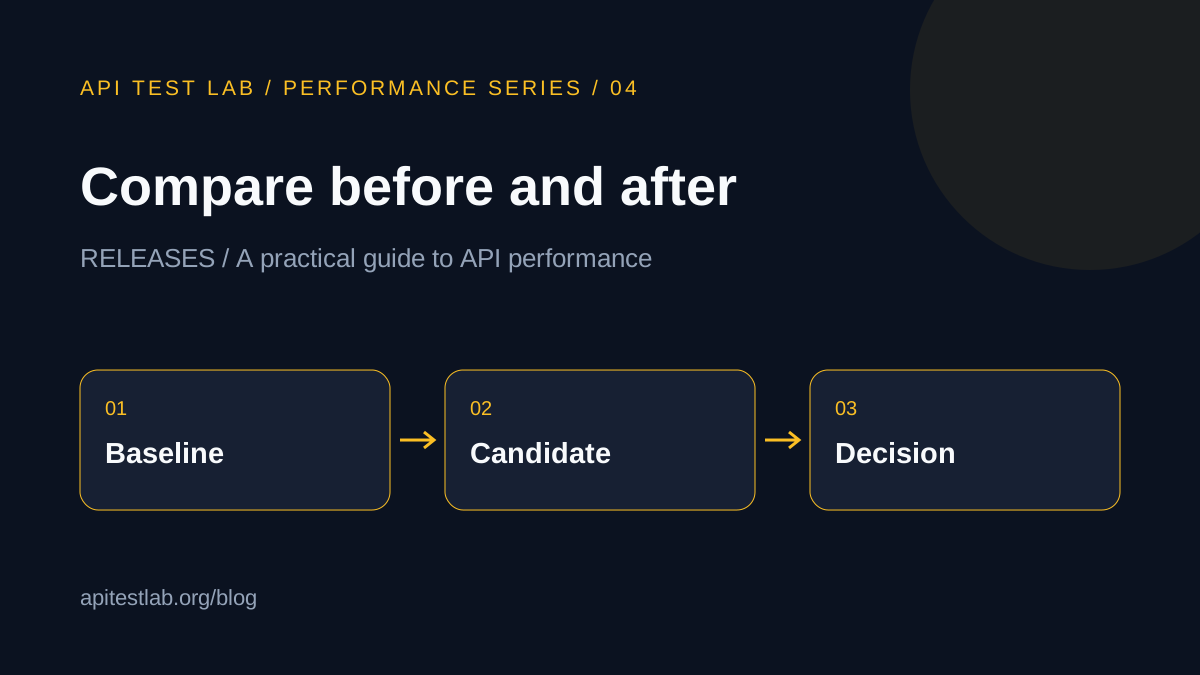
Use the same traffic profile, environment capacity, data setup, and measurement window. Document cache preparation and background jobs. Where practical, run the baseline and candidate close together to reduce environmental drift.
If shared staging traffic changes during a run, mark the result as uncertain. Repeat before deciding that a small difference is a code regression.
Combine absolute and relative limits
An absolute latency limit protects the user experience. A relative comparison catches deterioration while a service is still below that limit. For example, a team could investigate a repeatable p95 increase above 15% while also enforcing its agreed maximum latency. Those values are examples and need tuning to measurement variability.
Do not fail a release solely because one noisy sample moved slightly. Use sufficient observations, comparable intervals, and a documented rerun policy. Repeated failures should stay visible rather than being discarded until a run passes.
Keep the result actionable
Attach the application versions, workload configuration, timings, error groups, and relevant server observations to the failure. Include a reproducible request with secrets removed. If throughput was lower than intended, report that limitation explicitly.
Use a simple decision record:
- Which scenario failed?
- What threshold was exceeded?
- Was the baseline measured under comparable conditions?
- Is the result repeatable?
- Who owns the next investigation?
Add deeper tests when the change warrants them
A short release check cannot establish long-term stability or maximum capacity. Database migrations, caching changes, or retry behavior may justify a separate stress or soak run. Choose that follow-up using the traffic profile guide.
After a fix, rerun the same scenario and preserve both results. A clear before-and-after record makes future regressions easier to recognize.
Continue the series
1. How to Build an API Load Testing Plan
2. Load, Stress, Spike, and Soak Testing Explained
3. How to Read API Load Test Results
More from the blog
Read 3 related articles from our latest posts.