Postman Alternative for Load Testing (2026 Guide)
Looking for a Postman alternative with load testing? Compare the best tools, see features side by side, and learn to test API performance in 2026.
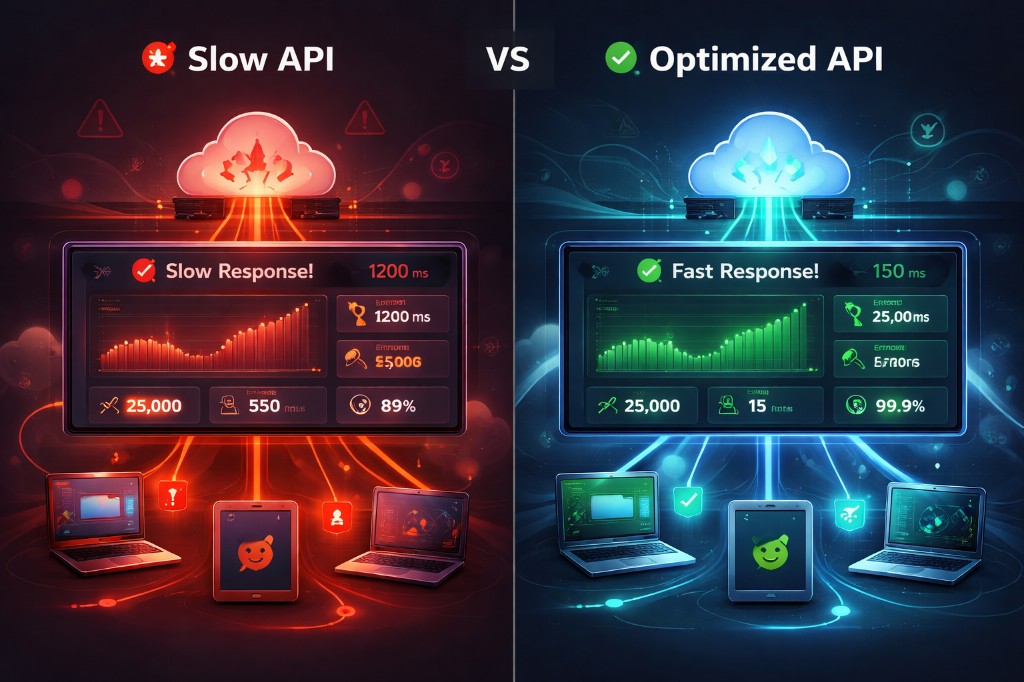
If you have ever tried to use Postman for load testing, you have probably hit its limits quickly.
Postman is excellent for API development and functional checks. But when you need real performance testing, scalable traffic simulation, and reliable bottleneck detection, it starts to fall short.
In this guide, you will learn:
- Why Postman is not ideal for load testing
- Which features matter in a real load testing platform
- The best Postman alternatives for load testing in 2026
- How to choose the right tool for your workflow
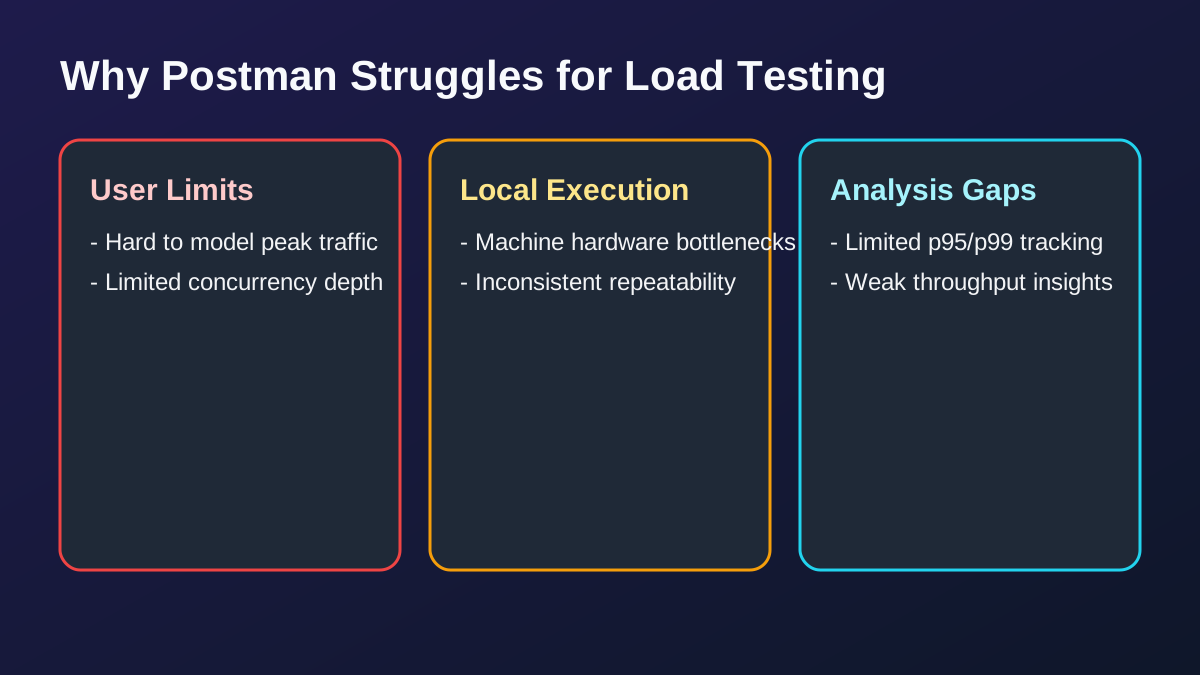
Why Postman Falls Short for Load Testing
Postman is widely used, but it was never built as a performance testing system.
1) Limited virtual users
Postman limits how many requests and concurrent users you can simulate in realistic scenarios. That makes it hard to model real production traffic.
2) Local execution bottlenecks
Many tests are tied to your local machine, which creates:
- Limited scalability
- Hardware bottlenecks
- Inconsistent performance results
3) Not built for deep performance analysis
Postman focuses on functional API testing, not full performance diagnostics such as:
- API latency trend analysis
- Throughput behavior under concurrency
- Sustained stress and soak testing
4) Restricted free-plan scale
As soon as tests become more realistic, free-tier limits can block useful performance experiments.
What You Need in a Real API Load Testing Tool
If performance matters, use tooling designed specifically for it.
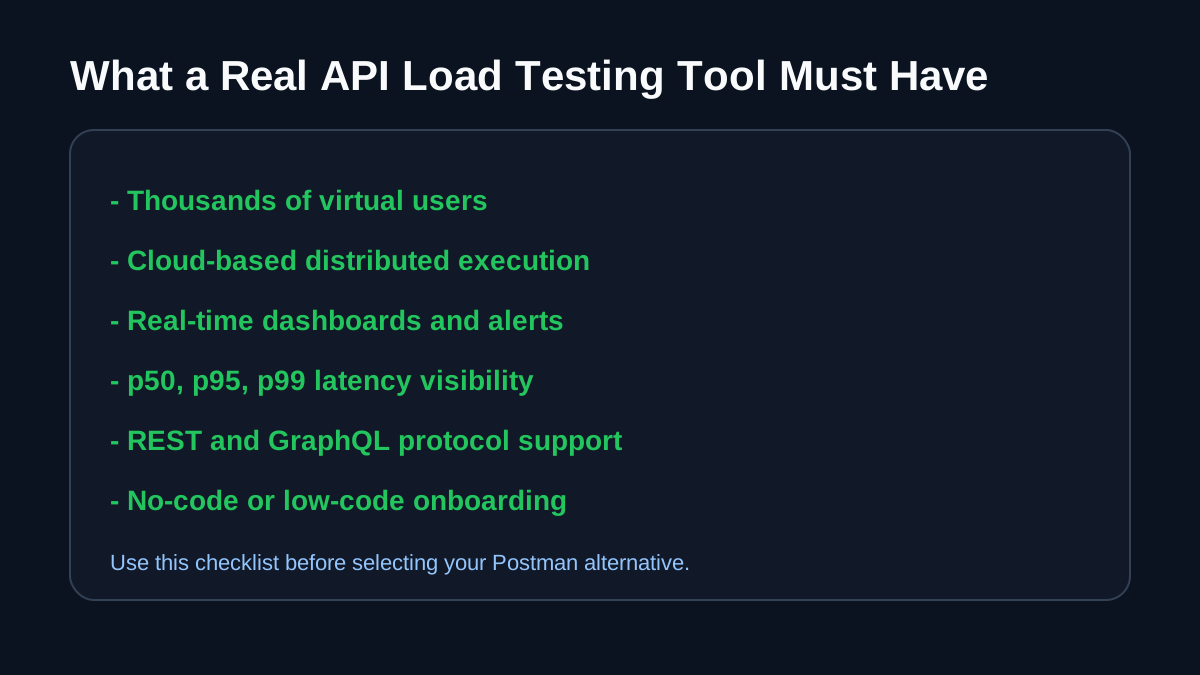
Look for these core capabilities:
- Simulate thousands of users
- Run tests in cloud infrastructure
- See real-time analytics and reports
- Track API response time distributions (p50, p95, p99)
- Support REST, GraphQL, and related protocols
- Offer no-code or low-code setup for fast adoption
Best Postman Alternatives for Load Testing (2026)
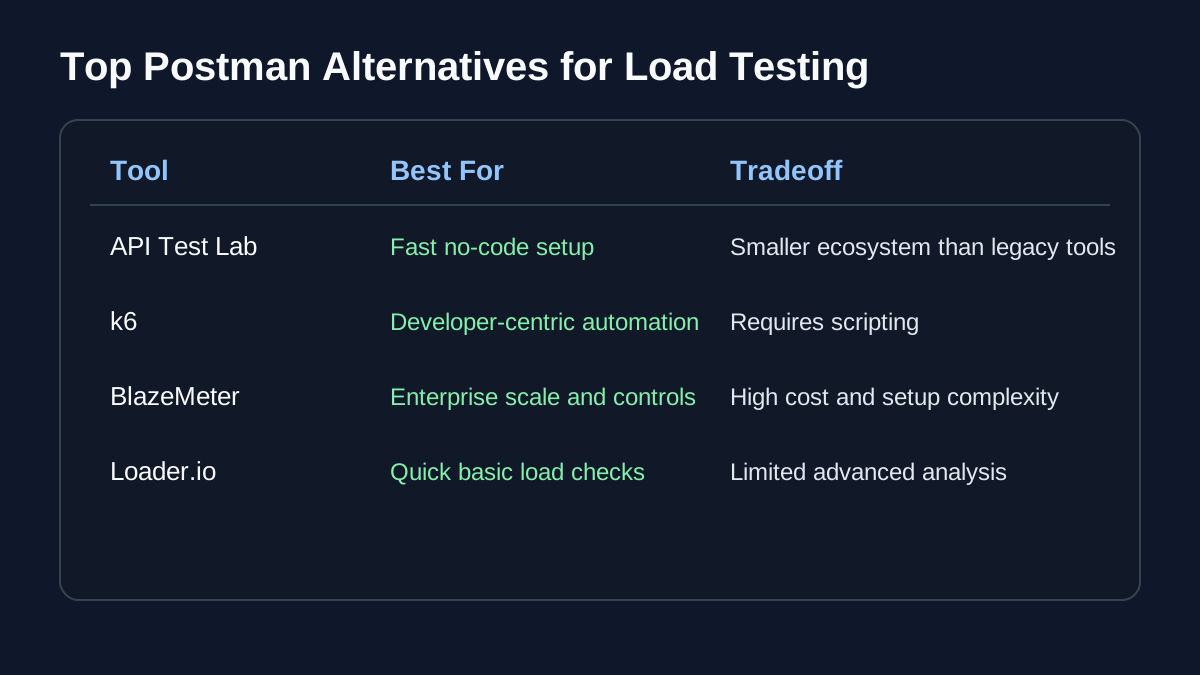
1. API Test Lab (Best for simplicity and performance)
If you want a modern browser-based API load testing tool, this is one of the strongest options.
Why it stands out:
- No installation required
- Built for API performance testing workflows
- Real-time response monitoring
- Friendly for both beginners and cross-functional teams
Best for:
- Startups
- Developers who want fast setup
- Teams that need quick insights
Start load testing with API Test Lab designed specifically for modern API teams.
2. k6 (Best for developers)
k6 is a high-performance open-source load testing tool.
Pros:
- Fast and lightweight runtime
- Script-based flexibility
- Great CI/CD integration
Cons:
- Requires coding
- Not beginner-friendly for no-code teams
Best for:
- DevOps engineers
- Advanced users with automation-heavy pipelines
3. BlazeMeter (Best for enterprise)
BlazeMeter is a commercial performance testing platform with enterprise capabilities.
Pros:
- Enterprise-level controls and integrations
- Scalable distributed infrastructure
Cons:
- Higher cost
- More complex setup and governance
Best for:
- Large organizations
- Enterprise QA and performance teams
4. Loader.io (Simple but limited)
Loader.io is easy to start with but limited for advanced use cases.
Pros:
- Simple interface
- Quick onboarding
Cons:
- Limited feature depth
- Not ideal for advanced performance engineering
Postman vs Dedicated Load Testing Tools
The practical difference is simple:
- Postman is excellent for functional API validation.
- Dedicated load testing tools are built for performance and scale.
If your goal is to:
- Test API speed under realistic concurrency
- Validate behavior under real traffic
- Find and fix bottlenecks before production
Then you need a purpose-built API load testing platform.
For a comprehensive guide on load testing approaches and tools, check out how to load test APIs, which covers both dedicated tools and Postman integration strategies.
How to Choose the Right Tool
Ask these questions before selecting a stack:
- Do I need no-code workflows or script-level control?
- Am I testing small internal APIs or production-critical systems?
- Do I need real-time analytics and alerting?
- How important is budget versus flexibility?
For most teams: start simple, then scale as complexity grows.

When You Should Stop Using Postman for Load Testing
Switch to a dedicated tool when:
- Your API is moving to production traffic
- You need to test real concurrency and sustained load
- You need reliable performance insights
- Your application slows down under load
Final Thoughts
Postman is a powerful API tool, but it is not designed for load testing at scale.
If you want to:
- Test API performance properly
- Handle high traffic confidently
- Identify bottlenecks early
Then moving to a dedicated load testing platform is the right next step.
The good news: modern tools are easier to use, more powerful, and built specifically for performance testing.
Ready to move beyond Postman? Start your free load testing trial today or explore more free API testing tools.
Next Steps:
- Sign up to test your APIs without Postman
- Review API testing best practices
More from the blog
Read 3 related articles from our latest posts.